
1st October 2026 | I Know I’m Overthinking, But I Can’t Stop
Have you ever found yourself going over the same conversation again and again? Maybe you're wondering whether you said the wrong thing, whether someone was upset with you, or what you should have said instead. Or perhaps you're worrying about something that hasn't even happened yet, going through all the things that could go wrong and trying to work out what you would do if they did.
And the really frustrating part is that you know you're overthinking.
You might even know that going over it again isn't helping. You can tell yourself that there's probably nothing to worry about, or that you're jumping to the worst-case scenario. But your brain just keeps going.
You might find yourself thinking, “I know I'm being irrational, so why can't I just stop?”
It's a really good question.
One thing I often talk to clients about is what I call the head and heart lag. You can know something logically without actually feeling it yet. Your head might be saying, “It's probably going to be fine,” but your body and emotions haven't quite caught up. You might still feel anxious or unsettled, and your mind might still be looking for something that could go wrong.
Knowing something logically doesn't automatically make you feel safe.
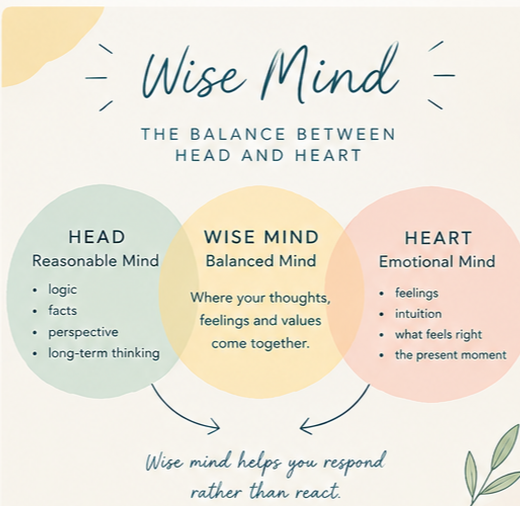
This is where wise mind can be helpful. It's about being able to hold both the emotional and reasonable parts of your experience. You might feel really anxious about something while also recognising that there isn't much evidence that anything bad is going to happen. You might feel disappointed about a mistake while also knowing that making a mistake doesn't make you a failure.
Both can be true, however if you already know that overthinking isn't helping, why is it so difficult to stop?
I think one of the most useful things you can do is get curious about what your overthinking is actually doing for you.
This might sound like a strange question. Surely overthinking is just something your brain does that makes you feel worse? But often, overthinking has a function. In other words, it's trying to achieve something for you, even if it isn't actually achieving it very well.
Perhaps your mind is trying to keep you safe by thinking through everything that could go wrong. Perhaps it's trying to give you a sense of control when something feels uncertain. Maybe it's trying to make sure you don't make the same mistake again. Or perhaps it's trying to give you a sense of certainty in a situation where certainty isn't really possible.
For example, you might find yourself thinking, “If I can just work out exactly what they meant, I'll know whether they're annoyed with me.” Or, “If I think through every possible outcome, I'll be prepared for whatever happens.”
Sometimes there can even be a self-critical function to overthinking. You might replay something you've done and pick it apart because, somewhere along the way, you've learned that being hard on yourself will stop you making the same mistake again.
So rather than immediately trying to get rid of the overthinking, it can be more helpful to get curious about it. What are you hoping all this thinking will give you? What are you trying to prevent? What feels so important about working this out?
Perhaps one of the most useful questions is whether the thinking is actually giving you what you're looking for. If you're looking for certainty, is another hour of analysing really going to give you certainty? If you're trying to prevent making a mistake, is replaying what happened actually helping you learn something new? If you're trying to feel more in control, is thinking through every possible scenario actually making you feel more in control, or is it making you feel even more anxious?
Sometimes the answer will be that there is something useful you can do. Maybe you need to solve a problem, have a conversation, make a decision or learn from something that happened. Thinking things through can be really helpful when it leads to something useful.
The difficulty is when the thinking has stopped moving you forward. You've already thought about it. There isn't any new information to find. You're just going around the same thoughts because your brain is hoping that one more thought will finally make you feel certain or safe. This is often the point at which it can be helpful to step out of the loop. Not because you've suddenly convinced yourself that everything is fine, but because you've recognised that continuing to think isn't actually doing the job your brain hoped it would.
This is where wise mind can come in again. You might be able to recognise, “I'm feeling anxious, and I don't know exactly what is going to happen. I can cope with not knowing.” Or, “I wish I'd handled that differently, and I've thought about what I can learn from it. I don't need to keep punishing myself.”
You are not trying to argue with your feelings or force yourself to feel differently. You're simply recognising what you're feeling while also deciding how you want to respond.
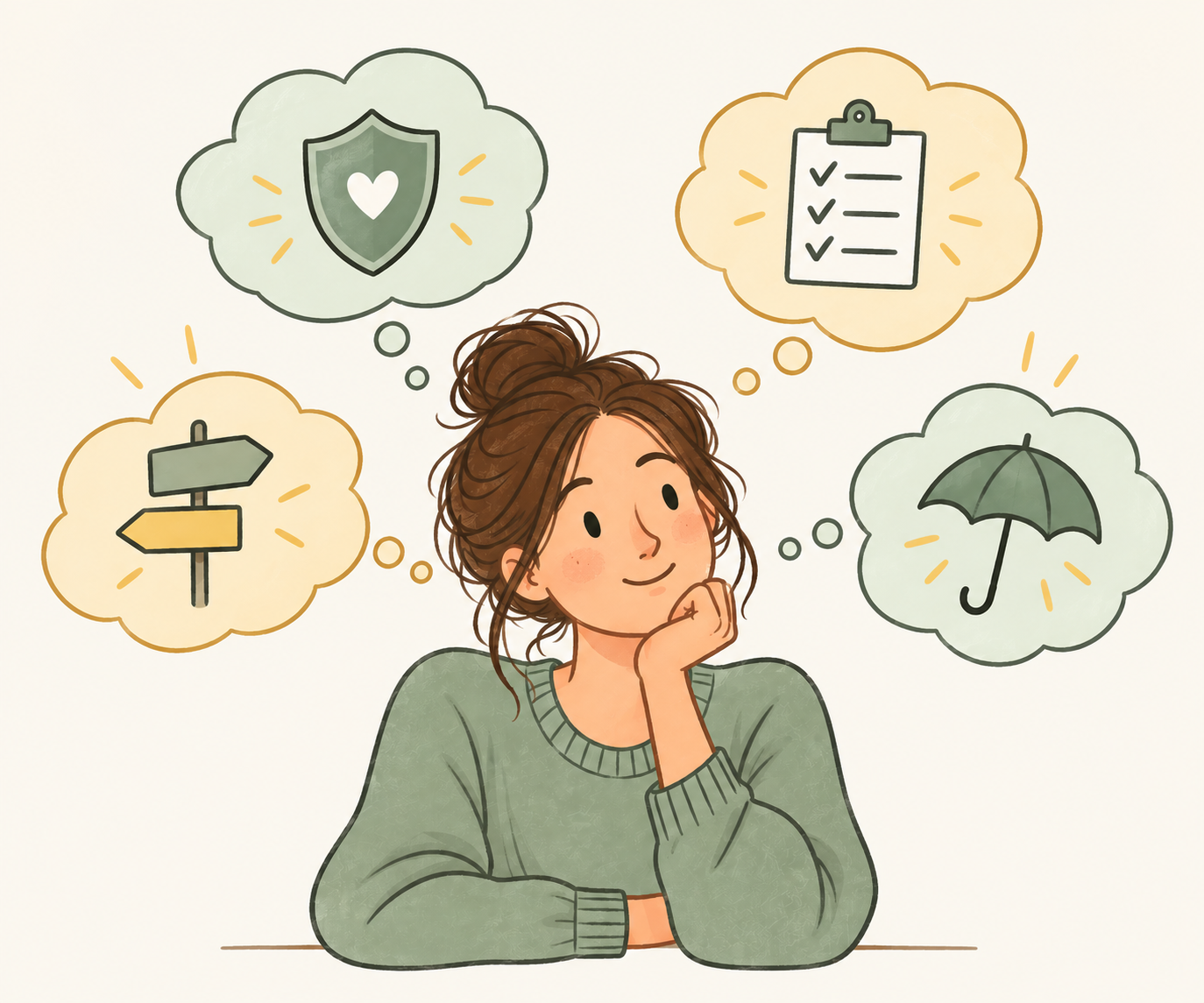
This doesn't mean you'll suddenly stop overthinking, and it doesn't mean difficult thoughts or feelings will disappear. It's about becoming more curious about your thinking rather than automatically getting pulled into it. This is one of the things we can explore in CBT. Rather than simply trying to stop a thought, we can look at the whole pattern: what triggers the overthinking, what you are hoping it will achieve, what you do when you're caught in it, and whether those strategies are actually helping in the long term.
So, if you find yourself thinking, “I know I'm overthinking, but I just can't stop,” try not to criticise yourself for it.
Instead, pause and get curious about what your mind is trying to do for you.
Your overthinking probably isn't happening for no reason. It may be your brain's attempt to protect you, prepare you, give you control or help you avoid something going wrong.
The problem is that a strategy can have a good intention and still become unhelpful.
And sometimes, the way out isn't to think harder.
It's to understand why you're thinking so much in the first place.