
16th July 2026 | What a Class of 8-Year-Olds Taught Me About Why Emotions Matter
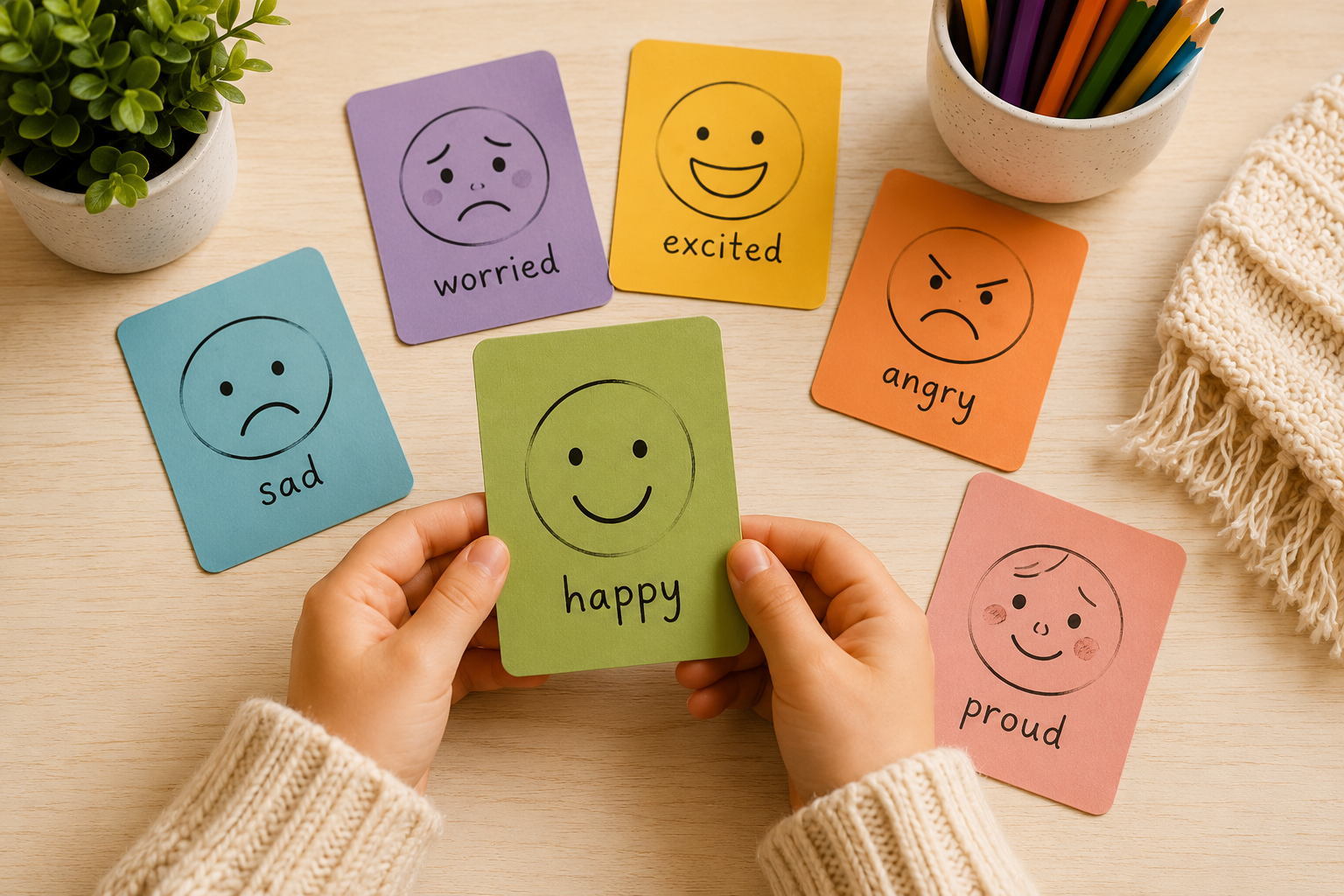
I did a workshop at my son’s primary school the other week to a class of 8 year olds, where I was talking to them about the link between feelings, thoughts and behaviours.
I started the workshop off explaining what I do as a CBT therapist by framing myself as a “brain detective” trying to solve the mysteries of the mind. I used a scene from the movie Inside Out, to explain what an emotion is and how they may take the lead in certain situations.
I asked them a question that I often ask adults in therapy: "Is it important to always be happy?" I expected a chorus of "yes." Instead, every single child answered "no."
As adults, many of us develop beliefs that emotions like anxiety, sadness or anger are signs that something is wrong, or that we should try to get rid of them as quickly as possible. The children hadn't yet adopted those beliefs—they simply accepted that every emotion had a job to do.
When I asked why different emotions are useful, here are some of their responses:
"Emotions help you solve problems."
"If you didn't feel sad, you wouldn't realise how nice it is to feel happy."
"People know when we need a hug."
"Fear stops us doing silly things that could hurt us."
"Happiness makes us want to smile and play."
"They help us know when something is good or bad."
Listening to them, I realised they already understood something that many adults have forgotten. What I often tell my clients is that we need to listen and pay attention to our emotions, as they are often signalling something important:
· Fear might be telling us to slow down or prepare.
· Sadness might be highlighting loss or something we deeply value.
· Anger might be pointing towards crossed boundaries or unmet needs.
· Guilt might encourage us to repair relationships.
One of the most common beliefs I hear in therapy is that difficult emotions are the problem. People often tell me they need to "get rid of" anxiety, stop feeling sad, or stay in control of their emotions at all times.
Ironically, it's often this struggle against emotions that keeps people stuck. When we spend all our energy trying not to feel something, we can end up avoiding the very situations, conversations or decisions that would help us move forward.
If we ignore, suppress or fight our emotions, they rarely disappear. Instead, they tend to get louder. They show up in our thoughts, our bodies and our behaviours, asking us to pay attention.
The children in that classroom reminded me of something beautifully simple: emotions aren't there to make life harder, they're there to help us navigate it.
Maybe, rather than spending so much energy trying to feel happy all the time, we should take a leaf out of the wisdom of a group of eight-year-olds and start asking ourselves a different question:
"What might this emotion be trying to tell me?"